

In every era, interior design has been influenced by trends. Some arrive with remarkable speed, dominate social media feeds for a few years, and then quietly disappear. While trends can inspire fresh perspectives, luxury homeowners face a different challenge: creating spaces that remain elegant, functional, and relevant long after a particular aesthetic has faded.
For owners of high-end residences, whether a coastal villa, urban penthouse, or countryside estate, the true measure of successful design is longevity. A well-conceived home should continue to feel refined and comfortable not only today but also ten or twenty years from now. This is where timeless design becomes more than a stylistic choice—it becomes a strategic investment in quality, functionality, and personal identity.
The Problem with Trend-Driven Interiors
The modern design industry often encourages constant change. New colors, materials, furniture silhouettes, and decorative elements emerge each season, creating pressure to update interiors regularly.
The challenge is that trends are designed to evolve. What feels cutting-edge today may appear dated surprisingly quickly. Homeowners who build entire interiors around temporary aesthetics often discover that their spaces lose relevance far sooner than expected.
Trend-focused design can also create practical issues:
- Higher renovation costs over time
- Reduced visual cohesion as styles change
- Lower emotional connection to the space
- Increased waste from replacing furnishings and finishes
Luxury residential projects require a different perspective. Rather than following the latest fashion, successful interiors focus on enduring principles that maintain their value and appeal across decades.
Read more:
1. What are the Interior Design Trends For 2023
2. 5 Trends Shaping Singapore’s Interior Design Scene
What Makes a Design Truly Timeless?
Timeless interiors are not defined by a specific style. They are defined by balance.
A timeless home may combine contemporary architecture with classical proportions, modern furniture with handcrafted details, or minimalist layouts with rich natural materials. The objective is not to belong to a particular design movement but to create harmony that transcends temporary trends.
Several characteristics consistently appear in successful timeless design concepts:
Strong Architectural Foundations
Good design begins with architecture rather than decoration.
Thoughtfully planned spatial relationships, balanced proportions, natural light, and intuitive circulation patterns remain valuable regardless of changing aesthetics. When the foundation is strong, decorative elements can evolve naturally without compromising the overall integrity of the home.
Neutral Yet Sophisticated Material Palettes
Materials play a crucial role in determining how a space ages.
Natural stone, premium wood, metal detailing, and bespoke finishes possess qualities that synthetic alternatives often cannot replicate. These materials develop character over time while maintaining their visual appeal.
Unlike highly fashionable finishes that quickly reveal their era, natural materials create a sense of permanence and authenticity.
Layered Design Rather Than Single-Style Purity
One of the biggest misconceptions about timeless interiors is that they must be strictly traditional.
In reality, the most enduring spaces often combine multiple influences. Contemporary furniture may coexist with classical detailing, while modern lighting complements artisanal craftsmanship.
This layered approach creates visual depth and prevents interiors from becoming locked into a specific design period.
The Role of Lifestyle in Long-Term Design Success
Many projects fail because they prioritize appearance over daily living. A beautiful room that does not support the homeowner’s routines eventually becomes frustrating to use. Timeless design recognizes that aesthetics and functionality must work together.
Successful interiors are built around real lifestyle scenarios rather than hypothetical magazine images.
For example:
- A family that entertains frequently requires different spatial planning than a private retreat.
- A penthouse used for international business gatherings needs different functional zones than a seasonal vacation residence.
- A multigenerational household demands flexibility that can accommodate evolving needs.
Design decisions become more durable when they are rooted in actual behavior rather than temporary visual trends.
This is one reason why personalized functional interiors continue to outperform trend-based solutions in luxury residential projects. Spaces tailored to the owner’s habits, preferences, and routines naturally retain relevance for longer periods of time.
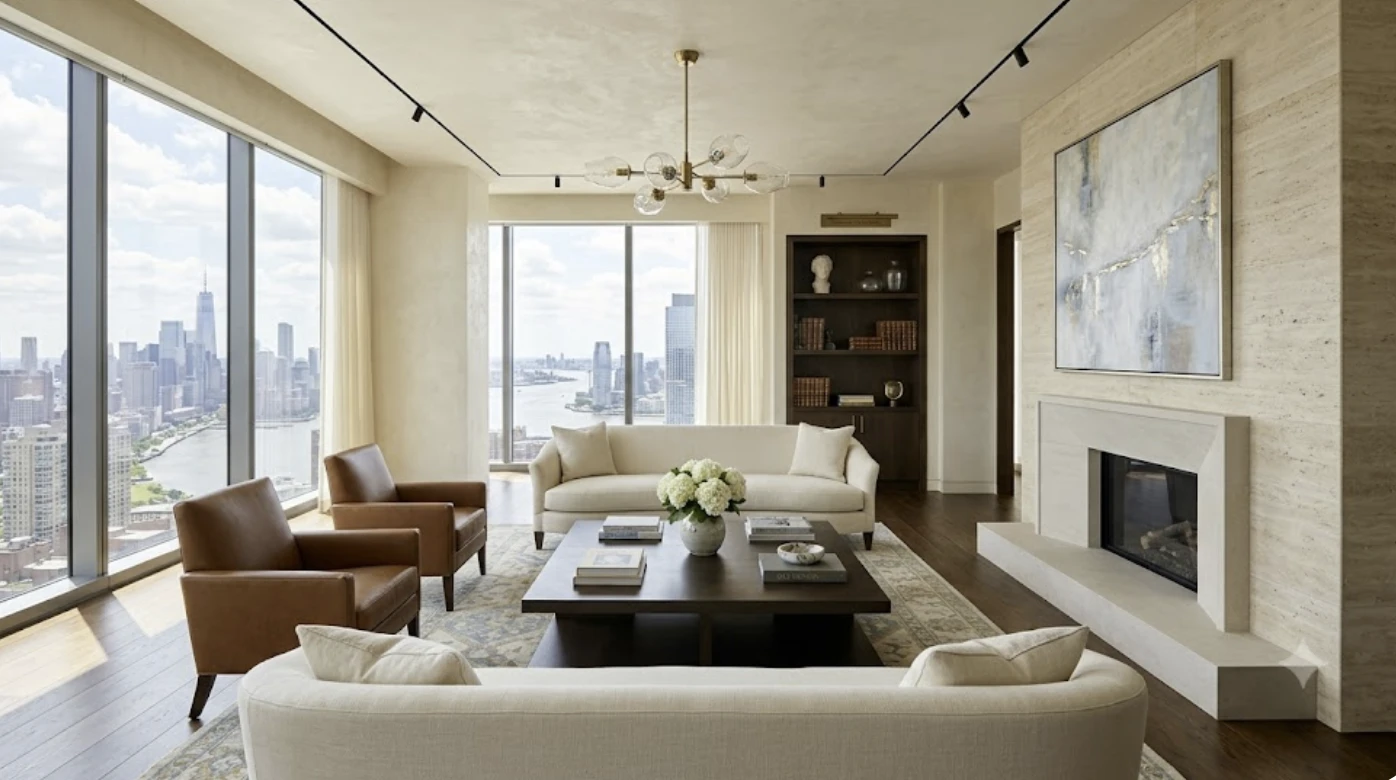
Bespoke residential interior design in the US and Europe: A modern penthouse living room featuring high-end craftsmanship, sophisticated neutral palette, and an integrated stone fireplace.
International Standards and Lasting Residential Design
The growing sophistication of luxury homeowners has led to greater attention toward international design methodologies.
Across the field of residential interior design in the US and Europe – https://oltdesign.com/, leading professionals increasingly prioritize long-term usability, technical precision, and architectural consistency over purely decorative outcomes.
This approach emphasizes:
- Comprehensive space planning
- Material durability assessments
- Future adaptability
- Integration of technology without visual clutter
- Cohesive design narratives
Rather than focusing on what is fashionable this year, designers evaluate how spaces will perform throughout the lifespan of the property.
As a result, many contemporary luxury residences now prioritize timeless value over short-term visual novelty.
Why Craftsmanship Matters More Than Ever
In luxury interiors, quality is often visible before it is consciously recognized. A custom stone edge, hand-finished woodwork, expertly fabricated metal detailing, or bespoke millwork contributes to an atmosphere of refinement that mass-produced alternatives rarely achieve.
Exclusive interior craftsmanship provides benefits that extend beyond aesthetics.
These include:
- Superior durability
- Greater design flexibility
- Better material integration
- Enhanced property value
- Stronger uniqueness and individuality
Craftsmanship also introduces a human element into architecture. While trends often rely on replication, artisanal work emphasizes originality. The result is an environment that feels authentic rather than manufactured.
Designing for Ten Years Instead of One
- One useful framework for evaluating design decisions is to ask a simple question:
- “Will this choice still feel appropriate in ten years?”
- This perspective immediately changes the decision-making process.
For example, highly fashionable colors may be introduced through artwork, accessories, or decorative elements rather than permanent architectural features. Similarly, bold statements can be incorporated in ways that allow future adaptation without requiring extensive renovation.
Timeless design does not reject innovation. Instead, it applies innovation selectively.
Technology, sustainability solutions, smart-home systems, and modern materials can all contribute to long-term value when integrated thoughtfully and discreetly.
The objective is not to freeze a home in time but to create a framework capable of evolving gracefully.
Case Study: The Bespoke Approach to Longevity
Many contemporary luxury studios have embraced a more personalized methodology that prioritizes longevity over trend adoption.
For example, projects developed by OLT DESIGN under the direction of founder Tetiana Oliinyk often begin with an in-depth analysis of client lifestyles before any aesthetic decisions are made. Rather than centering the process around trending visual references, the design strategy focuses on behavioral patterns, architectural context, material quality, and long-term usability.
This type of bespoke methodology reflects a broader industry movement toward creating environments that remain meaningful and functional throughout changing stages of life.
The emphasis shifts from decoration toward the creation of lasting living experiences.
Bespoke residential interior design in the US and Europe
The Value of Turnkey Thinking
Another defining characteristic of timeless interiors is consistency throughout the entire design process.
When conceptual development, technical documentation, procurement coordination, and design supervision operate as a unified system, the final result tends to achieve greater coherence. A fragmented process often introduces compromises that weaken the original vision.
Conversely, comprehensive project management allows every element—from mood boards and material selections to final implementation—to support a single design narrative.
This approach has become particularly important as luxury projects increasingly involve international teams, remote collaboration, and properties located across multiple countries.
The ability to maintain design integrity regardless of geography contributes significantly to long-term success.
Conclusion
Luxury design should never be measured solely by how impressive it appears immediately after completion. The more meaningful question is how a home performs years later.
Timeless interiors succeed because they are built upon enduring principles: thoughtful architecture, natural materials, superior craftsmanship, functional planning, and a deep understanding of human behavior. They prioritize authenticity over novelty and personal relevance over temporary popularity.
While trends will continue to evolve, homes designed around timeless design concepts possess a rare quality: they remain desirable across generations. By investing in quality materials, exclusive interior craftsmanship, and personalized functional interiors that support genuine lifestyle scenarios, homeowners create environments that continue to inspire long after current trends have disappeared.
Ultimately, the most successful luxury residence is not the one that follows fashion most closely—it is the one that feels just as compelling twenty years from now as it does today.
