

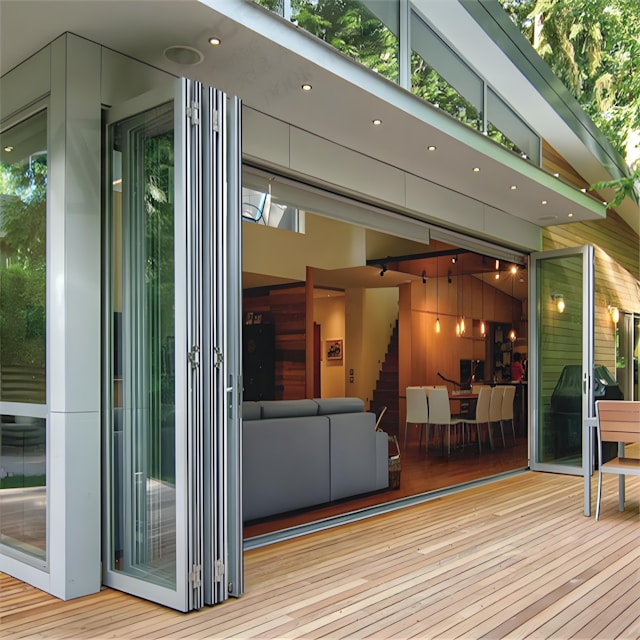
Open-plan living has dominated home design for the better part of two decades. Knock down the walls, flood the space with light, let the kitchen flow into the dining area and the living room stretch all the way to the back garden doors. For a while, it felt like the answer to everything. But as more homeowners look to reclaim some structure in their spaces, many are now turning to a trusted bifold door supplier to find solutions that offer the best of both worlds.
Then life happened.
Kids doing homework at the kitchen table while someone else is on a work call. A home office that is also technically the guest bedroom. A TV blaring in the same space where someone is trying to read. Open-plan living is wonderful in theory, but plenty of homeowners have quietly started searching for ways to divide their spaces back up without losing the brightness and flow they worked so hard to create.
That is where room dividers come in. And not all of them are created equal.
The Old Options and Why They Fall Short
Before we get to the good stuff, it is worth running through what people have tried.
Curtain dividers are cheap and easy to install, but they look temporary because they are. They bunch, collect dust, and rarely feel like a design choice. Heavy curtains also block light completely, which defeats the whole point of an open-plan layout.
Bookshelf dividers are more practical. You get storage and separation in one piece of furniture. The problem is that they are fixed, heavy, and once you commit to a position, moving them is a full-afternoon job. They also rarely reach ceiling height, which means sound travels freely over the top.
Sliding doors are a step up. They move, they look clean, and when done right they can be genuinely stylish. But a single sliding panel only covers half the opening at any one time. The other half of the doorway is always blocked by the panel sitting in front of it. It is a compromise solution.
Partition walls are the nuclear option. Permanent, effective, and completely inflexible. If your needs change, or the next owner of the house wants the space back open, you are looking at a renovation job.
Why Bifold Doors Work Differently
Bifold doors operate on a simple principle. Instead of one or two panels that slide to the side and block part of the opening, bifold panels fold against each other and stack neatly at one or both ends of the frame. The result is that you can open the entire width of the space in one go, or close it completely to create a fully separate room.
That flexibility is the thing that sets bifold doors apart from everything else in this category.
When you need the rooms to be separate, close them. When you want the space to feel connected again, open them fully and they practically disappear to the side. No panel sitting awkwardly in the middle of your sightline, no curtain pooling on the floor. Just the choice, whenever you want it.
For a home office that doubles as a guest room, this is genuinely useful. During the week it is a quiet, closed-off workspace. On weekends when family visits, the doors fold back and the room becomes part of the main living space again. The same logic applies to a playroom off the kitchen, a formal dining space that you want to open up for parties, or a utility room you would rather not look at while cooking dinner.
Glass Panels and Natural Light
One of the smartest things about modern bifold doors as room dividers is the use of glazing. Full-length glass panels let light travel through the partition while still giving you acoustic and visual separation when you need it.
This matters a lot in homes where the division you are creating would otherwise create a dark, boxed-in room. A solid partition wall between a kitchen and a living room could leave one side feeling like a corridor. Glass bifold doors keep the light moving through the space even when they are closed.
Frosted or textured glass options give you privacy without blocking light entirely, which works well for home offices or bathrooms where you want separation but not a blackout.
Choosing the Right Bifold Door for an Interior Application
Interior bifold doors used as room dividers differ from the large external bifold doors you see opening onto patios and gardens. For internal use, you are typically looking at lighter frames, a wider range of finishes, and panel configurations that suit narrower openings.
When you are sourcing a bifold door for interior use, the things worth checking are the panel width and how many panels your opening needs, the frame material (aluminium, timber, and uPVC all behave differently in interior environments), the glazing options, and whether the hardware allows the doors to stack neatly without jutting out too far into the room.
Working with a reliable supplier matters here more than people expect. The measurements have to be precise, the frame has to be square, and the folding mechanism needs to run smoothly for years. A supplier who asks the right questions at the start and provides clear guidance on installation will save you a lot of frustration later.
Aesthetics That Actually Work
Room dividers have a reputation for looking like an afterthought. Bifold doors, when chosen well, look like part of the original design.
Slim aluminium frames in anthracite grey or matte black sit well in contemporary interiors. Timber frames suit older properties or Scandi-style homes where warmth and texture matter. The doors can be painted or finished to match existing joinery, which means they integrate rather than interrupt.
Floor-to-ceiling bifold panels make a particularly strong impression because they follow the vertical lines of the room and make the ceiling feel higher. Even in a modest-sized space, that detail changes how the room feels.
The Practical Bottom Line
If you are trying to solve a noise or privacy problem in an open-plan home without giving up light or flexibility, bifold doors are the most complete answer available. They outperform curtains on durability and aesthetics, beat sliding doors on how much of the opening they can clear, and give you options that a fixed partition wall never will.
The upfront cost is higher than a curtain rail and lower than a new wall. What you get for that investment is a divider that works properly, looks considered, and adapts to however you use your home from one season to the next.
